50 UGC Ad Hooks That Stop the Scroll and How to Test Them
October 13, 2026
See the hooks we would write for your product
Free text preview of hooks, angles and a script. Video ads render on paid plans.
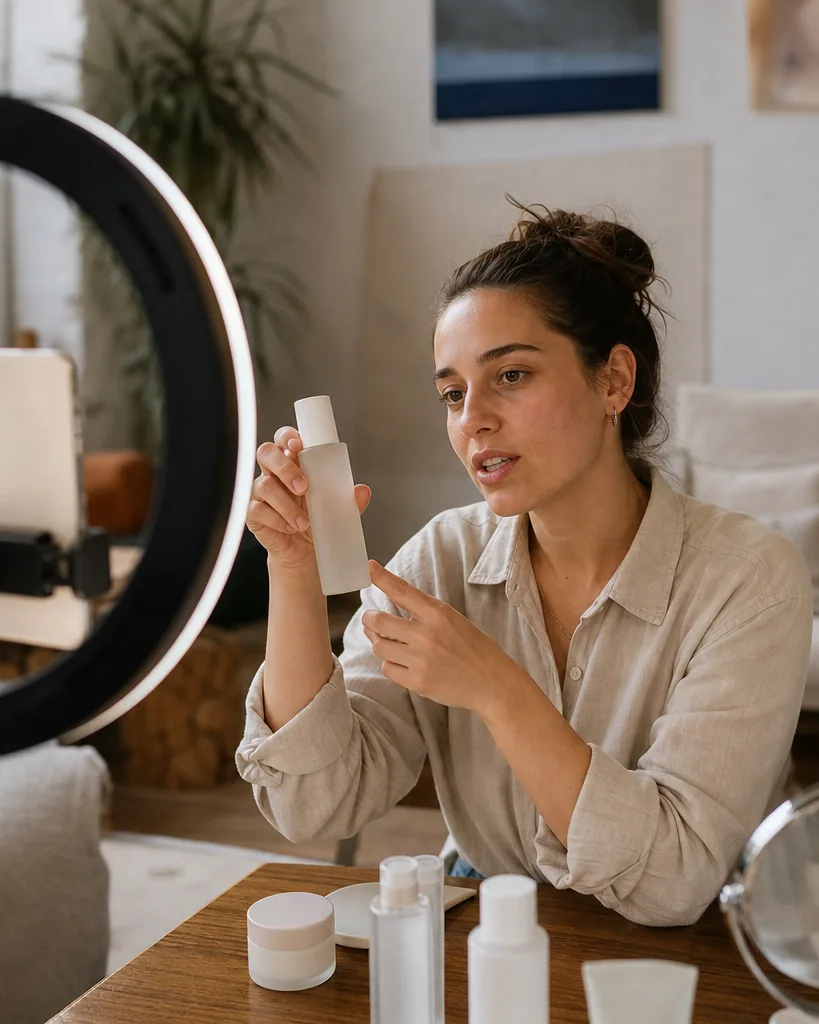
A UGC ad hook is the first one to three seconds of a creator-style video, the line or visual that decides whether someone keeps watching. The best UGC style ads open with a specific problem, a surprising claim or a visible result, then prove it fast. Below are 50 hooks grouped by angle, plus a simple way to test them.
Most brands don't have a video problem. They have a hook problem. The body of the ad can be solid, the offer can be good, and the whole thing still dies in the feed because nobody made it past the opening line. That's why the fastest way to improve AI UGC ads is rarely a new script. It's ten new openings on the same script.
Why the hook matters more than the rest of the ad
On Meta and TikTok, people decide in a moment whether a video is for them. If the opening doesn't name their situation, show something odd or promise a payoff, they scroll. Everything you paid for after that point is never seen.
There's a practical upside here. Because the hook is short, it's cheap to vary. You can keep the same creator, the same product demo and the same call to action, swap only the first sentence, and you've got a clean test. That's the logic behind building ads as variants instead of one finished video at a time.
50 UGC hooks, grouped by angle
Use these as patterns, not copy to paste. Replace the bracketed parts with your product, your customer and your proof.
Problem and frustration hooks
- "If your [problem] keeps coming back, this is probably why."
- "I tried everything for [problem] before I found this."
- "Nobody tells you this about [problem]."
- "Stop doing [common habit] if you have [problem]."
- "This is what [problem] actually looks like after a month."
- "I was so done with [problem] that I almost gave up."
- "The reason [usual fix] never worked for me."
- "POV, it's 7am and [problem] has already ruined your day."
- "Three signs your [thing] is the real problem."
- "I wasted money on [category] until I learned this."
Result and transformation hooks
- "Day one versus day thirty with [product]."
- "Here's my [routine] before and after switching."
- "This is the only [category] that made a difference for me."
- "Watch what happens when I [use product] on [surface or situation]."
- "I didn't expect this to work, and then it did."
- "The fastest way I've found to [desired result]."
- "My [friend or partner] noticed before I did."
- "One week in and I'm not going back."
- "This replaced three things in my [bag, kitchen, routine]."
- "I finally get why everyone talks about this."
Curiosity and pattern break hooks
- "Don't buy [category] until you've seen this."
- "This looks weird, but hear me out."
- "I'm going to say something unpopular about [category]."
- "Wait for it."
- "I found the [product] everyone keeps sold out."
- "Why is nobody talking about this?"
- "I tested this so you don't have to."
- "Things I'd never buy again versus this."
- "This tiny detail changed everything."
- "I was wrong about [category]."
Social proof and authority hooks
- "As a [profession], here's what I actually use."
- "My [dermatologist, trainer, mechanic] told me to try this."
- "I read the reviews so you don't have to. Here's the pattern."
- "The most common complaint about [category], and how this fixes it."
- "What I recommend to every [customer type] who asks."
- "I've used [category] for ten years. This one's different."
- "My honest review after a month."
- "The question I get asked most about my [routine]."
- "Here's what I'd buy if I were starting over."
- "Real talk, is [product] worth it?"
Offer, objection and comparison hooks
- "If [price] sounds like a lot, do this math with me."
- "[Product] versus the cheap version, side by side."
- "You don't need [expensive alternative]. You need this."
- "Here's what you actually get in the box."
- "If you've got [objection], watch this first."
- "The [category] I'd pick for someone who hates [task]."
- "How I made [result] happen without [common sacrifice]."
- "Three reasons I switched, and one thing I don't love."
- "This is for you if you've tried [competitor type] and quit."
- "Gift idea for the person who has everything."
How to pick which hooks to test first
Fifty hooks is too many to launch at once with a normal budget. Pick by angle, not by gut feeling. A simple order that works for most stores looks like this.
- Start with your reviews. Read your best and worst product reviews and note the exact words customers use. A hook built from a real customer phrase usually beats one you invented.
- Cover different angles. Pick two hooks each from problem, result, curiosity, authority and objection. If one angle wins clearly, you've learned something about your buyer, not just about a sentence.
- Keep the body identical. If you change the hook and the creator and the offer at the same time, a winner tells you nothing you can repeat.
- Match the visual to the line. A hook about a result needs the result on screen in the first second. Say it and show it.
A simple testing setup for hooks
Run hook tests as a small batch inside one campaign, with the same audience and the same offer, so the only real difference is the opening. Give every variant enough spend to show a signal before judging it. A common rule of thumb is to wait until each ad has spent at least your target cost per purchase before you kill it, unless its click-through rate is clearly far below the rest.
Read results in order. Hook rate and thumb-stop first, because that's what the hook controls. Then click-through rate. Then cost per acquisition and return on ad spend, which need more data. When a hook wins, don't just scale it. Write five new hooks in the same angle and test them against the winner. That's how one good idea turns into a month of fresh creatives.
Doing this by hand means writing scripts, booking creators and editing dozens of cuts. GeneratedUGC does the heavy part for you: paste a product link, get hooks and angles drawn from your reviews, AI creators, assembled variants and a testing loop that keeps the winners. If you want to see what that costs for your volume, the AI UGC platform pricing page lays out the limits on each plan.
Common hook mistakes to avoid
- Starting with the brand name. Nobody's waiting to hear it. Lead with them, not you.
- Slow intros. "Hey guys, so today I want to talk about" burns the only seconds that matter.
- Claims you can't show. If the hook promises a result, the next two seconds have to prove it, or the ad feels like a bait.
- Testing too few. Two hooks is a coin flip. Ten across five angles is a test.